Mar 20, 2026
Report Remove is Child Support Helpline ran by Childline. It exists to young people under 18 in the UK to confidentially report sexual images and videos of themselves and remove them from the internet. The charity works with the Internet Watch Foundation (IWF), an organisation dedicated to removing nude images of under 18s from the internet. The process is simple for the user. They create an account, enter their age range and report the image or video to the IWF. They can also request support from their Childline counsellor.

The IWF’s process of removing the videos varies based on the location. If the content is found to be hosted in the UK, they contact the police and issue a takedown notice to the host, which they must obey. It is then usually taken down in hours.
However, this is less than 1% happen in the UK. A lot of it is hosted in a country that is part of INHOPE, an association of around 50 countries (UK, EU member states, Australia, USA, Brazil, South Korea, Taiwan, South Africa, Russia and Japan) dedicated to combatting child sexual abuse material. If the host is in INHOPE, then the process is to send a report to the INHOPE reporting system which then forwards the report to the relevant INHOPE hotline. That branch will then follow their country’s procedure, the duration of which depends on the country, but the IWF will be sure to follow the process and pressure the branch if needed. If the host isn’t in an INHOPE country, the case is reported to the UK’s National Crime Agency, who forward it to Interpol, the international police organisation, who forward it to the appropriate country.
The IWF has been quite successful with their processes. In 2024, they reported that “one million webpages (1,228,090) showing at least one, and often many tens, hundreds or thousands of child sexual abuse images and videos have been removed from the internet thanks to our work over the past five years alone”.
Report Remove | Childline

Mar 20, 2026
Kulpa is a free mobile app, available on iOS and Android, which stores digital evidence whether that’s photos, videos, audio, text documents and text conversations. You can also use their web app. These items can be uploaded or been created directly from the Kulpa App. It was developed by the Jersey-based firm Kulpa Platforms.
Kulpa is usable for victims of any incident, be that abuse, people claiming insurance, accident reporting & incident claims in the heavy industry and complaints to police and local authorities.
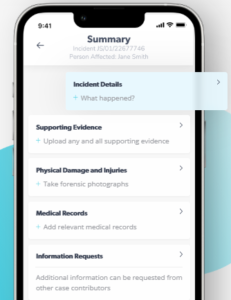
The way the app works is that you can create evidence files. First you give summary of what happened, when and where, then upload any evidence you have that prove what happens (photos, videos, CCTV, social media uploads, messages, screenshots etc). Next you upload forensic images of physical damage or physical injuries which, with Kulpa’s in-app technology, will come out scaled and crystal clear, as well as medical records and evidence of physical or mental injuries. You can also share the file with someone else if they have evidence to contribute to the file.
The Kulpa file is a better option than a standard cloud storage because it guarantees legally admissible, verified evidence, with proof that the evidence is real. It also doesn’t change the files at all, allows for files of any size and has strong data security and privacy measures.
Kulpa then offers to share the evidence file, with connected organisations, such as the appropriate police force, Victim Support. There’s also the opportunity to send it to the Kulpa legal team or just another contact of your choosing. There’s options also to anonymously share evidence or just store it on the app until you are ready to use it.
Kulpa stores the data in a separate cloud, away from your phone storage and will remain available if the app is deleted. The app has an internal PIN protection option and its possible using built-in Android and iOS features to hide the app when necessary. The app is highly secure and is certified by a UKAS accredited certification body, the British Standards Institute (BSI), which has given it certifications that mean that the system preserves the confidentiality, integrity, availability and authenticity of all information, and that data captured with, or uploaded to, the platform, holds evidential weight, is legally admissible, and able to support a legal process if and when required.

The app was successful in testing on the Island of Jersey with around 180 incidents reported and 1,465 pieces of evidence submitted during its first three months of testing. It’s currently being used and praised by police forces in Hertfordshire and Essex as well as groups supporting victims of domestic abuse such as Chloe Smith, the chair of Croydon’s new Violence Against Women and Girls Community Action Group who says that “Kulpa will go a long way to helping people not only be believed, but also proving their case, too.”
https://www.kulpacloud.com/
https://apps.apple.com/gb/app/kulpa/id1609323523-Li Link to Apple Store
https://play.google.com/store/apps/details?id=io.kulpa.kulpa Link to Google Play Store
Mar 20, 2026
Enough is a government campaign aimed at protecting women and girls on university campuses. There are over 30 UK universities involved in a partnership with the government’s campaign, including Greenwich, Southampton, Exeter, Reading and Chester. The campaign involving explaining forms of abuse there are, examples of how you could step in if you saw the different forms, how to get support as a victim of abuse or if you know someone who is, and how to report it. There’s also mention of times when the reader could be the abuser and has been potentially unintentionally causing harm to someone else.
There’s also a quiz to test your knowledge to see how well you understand the issue. If you wish to check the website out for yourself but are worried about being seen, there is a “quick exit” button to go to the new tab page, hiding what you’d been looking at. The website talks about abuse towards women and girls but there’s support for all victims.
https://enough.campaign.gov.uk/
https://www.theguardian.com/technology/2025/aug/19/social-media-still-pushing-suicide-related-content-to-teens-despite-new-uk-safety-laws
https://news.sky.com/story/online-safety-laws-to-be-toughened-to-make-blocking-of-self-harm-content-a-legal-requirement-13427167
https://www.gov.uk/government/news/online-safety-laws-to-strengthen-to-protect-people-of-all-ages-from-devastating-self-harm-content
Mar 20, 2026
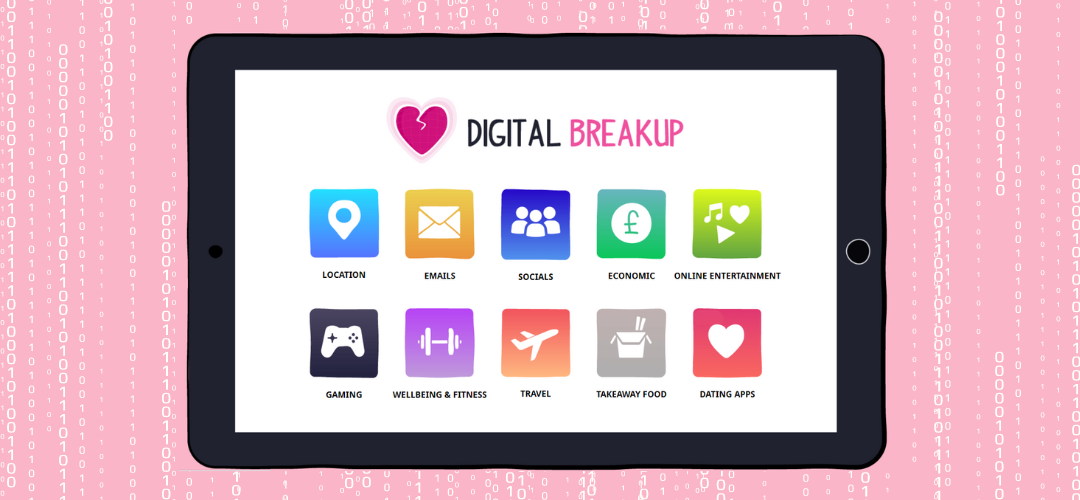
In England and Wales, one in four women will experience some form of domestic abuse in their lifetime, and tech abuse is an increasing part of that problem. Abusive partners may use technology to control, harass or intimidate you. To help solve this Refuge, the UK charity provided support for women and children experiencing domestic violence, has teamed up with Avast, the Czech cybersecurity software company, has developed Digital Breakup, an online learning tool with advice on how secure their devices and platforms against tech abuse from a partner or ex partner.
For example, for socialising accounts, such as WhatsApp, Instagram and Zoom, they talk about how if someone else access this account, they can read your messages, impersonate you or lock you out of your account. In order to keep these accounts safe, they recommend that after a breakup you check login history and sign out your account from any device that isn’t yours, change your passwords to longer, stronger, check your privacy settings and block, unfriend, unfollow, mute and restrict your partner or anyone who may be linked to them and report any online harassment or breaking of community standards to the platform.
They also offer advice with regards to location settings, email accounts, financial accounts, online entertainment accounts (i.e. Netflix, Spotify), gaming accounts, welling & fitness apps, travel apps (i.e. flight booking sites, Uber, train or bus times/ticket sites), takeaway/delivery apps and dating apps.
The extensive range of information they provide is well researched and useful so I would recommend checking if you feel you need to protect yourself from potential dangers or know someone that does. It’s also completely free to use.
https://refugetechsafety.org/digitalbreakup/
There’s also similar information accessible in an article called “Secure your tech” by Refuge
https://refugetechsafety.org/secure-your-tech/
Mar 20, 2026
Toxic masculinity refers to a set of harmful beliefs and behaviours that exaggerate traditional ideas of what it means to be a man. It’s rooted in old-fashioned gender roles, but taken to unhealthy extremes — promoting dominance, aggression, and emotional suppression rather than empathy, equality, or self-awareness.

As society has progressed, freedoms and rights for women and LGBTQ+ people have expanded. For some men, however, these changes are seen not as steps forward but as personal threats. In previous centuries, men held far greater legal, social, and economic power — they were widely viewed as stronger, smarter, and more rational. Losing that dominance can feel, to some, like losing their identity.
Within the culture of toxic masculinity, the “ideal man” is strong, heterosexual, confident, and either the main breadwinner or the only one. He’s supposed to have “manly” interests like sport, cars, or fitness — and to dismiss anything seen as “feminine,” such as empathy, cooperation or creativity. For some, showing any emotional vulnerabilities is weak. In this worldview, figures like Arnold Schwarzenegger or Sylvester Stallone are seen as peak masculinity, while someone like Harry Styles or Andrew Garfield might be mocked for being “soft” or “weak.”


Depending on where you are, this idea of the perfect man can also include being patriotic or deeply religious. For some, their beliefs are reinforced by traditional interpretations of religious texts that portray patriarchy as the “natural order” of society.
Men who buy into this culture often label themselves as “alpha males,” positioning others as “beta” or inferior. The term comes from outdated wolf studies that suggested strict dominance hierarchies within packs — a myth later disproven. In reality, wolf “alphas” are parents who guide rather than dominate. The irony is that the “alpha” image many men aspire to is based on flawed science in the first place.
Public figures who embody or promote this mindset have huge platforms. Andrew Tate, a former kickboxer from Luton, is one of the most prominent examples. With millions of followers on X (formerly Twitter), he frequently tells men to dominate women and assert control in relationships. Dubbed by many as the “king of toxic masculinity,” Tate has also faced multiple serious legal accusations and investigations related to abuse and human trafficking.
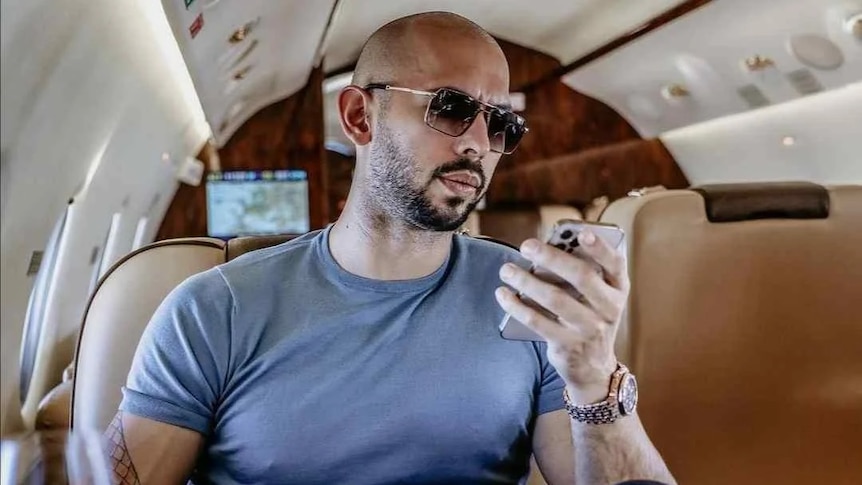
There are others, too, who preach similar “tough guy” ideals but don’t necessarily live up to the image themselves — from Piers Morgan (who famously stormed off live TV after being challenged) to Donald Trump (who some call a nepo baby, having inherited his wealth and successful businesses from his father), Jake Paul(a YouTube influencer turned boxer), Alex Jones(an American conspiracy theorist), and Jeremy Clarkson. Many of these figures lean toward the political right and appeal to audiences who feel alienated by mainstream media or social progress. Their followers often overlook the hypocrisy of these influencers because they identify with the anger or nostalgia behind their message.


Ultimately, toxic masculinity harms everyone — including the men who embrace it. By equating strength with dominance and kindness with weakness, it traps men in a narrow emotional box. It discourages vulnerability, empathy, and real connection — qualities that make relationships and communities thrive.
The good news? Conversations around gender and identity are changing. More men are recognising that being strong doesn’t mean being unfeeling, and that masculinity can evolve without losing its value. True confidence comes from balance — not control.