Mar 20, 2026
Intimate image abuse, also known as revenge porn’, non-consensual pornography or image-based sexual abuse is the creation of and distribution or threat of distribution of sexually explicit images or videos of individuals without their consent, with the punitive intention to create public humiliation or character assassination out of revenge against the victim. The material may be used by the perpetrators to blackmail the subjects into performing other sexual acts, to coerce them into continuing a relationship or to punish them for ending one, to silence them, to damage their reputation, and/or for financial gain.
Legislation was established by the UK government in 2015 and those found guilty of it, can be sentenced to up to 2 years in prison and a fine.
The helpline was established alongside the legislation by a collaboration of the Home Office, Helplines Partnership, the UK Safer internet Centre and SWGfL. The aim is to provide advice and support to victims of revenge porn that are over the age of 18 that live in the UK. They will provide advice and support from one of the helpline practitioners. They will help with reporting and removing content, advise on how to report and remove content from social media platforms, advise on how and evidence to gather to report to the authorities and direct callers to a free legal advice service to provide more information and options.
The Helpline is run by 6 women in an office near Exeter, Devon and is funded by the UK Government and donations. It’s open from 10am to 4pm, Monday to Friday excluding bank holidays.
You can contact the helpline via phone (0345 6000 459-calls cost the same as standard landline numbers that start with 01 or 02) or email (help@revengepornhelpline.org.uk). There is also an automated step-by-step chatbot called REIYA that asks questions about what you have been experiencing to provide advice and direct you to the best service for support.
In 2023, it received just under 19,000 reports in 2023, and it’s maintained a successful takedown rate of 90% since 2020. It’s clearly an efficient system so if you or anyone you know has fallen victim to intimate image abuse, be sure to visit the website.
https://revengepornhelpline.org.uk/
Mar 20, 2026
Digital Safety
Chayn Online Safety Guide
A guide designed to support survivors of digital harm—especially those who may be feeling overwhelmed, confused about what’s happening, or unsure of where to turn.
Childnet Guides for young people (aged 11-18)
Information covering a range of key topics about online safety and social media
Cyber Helpline Guides
Practical steps to resolve a wide range of cyber attaches and tech-faciliuated abuse
Digital Breakup Tool
A guide to help people secure their phones, accounts and online life after leaving an abusive relationship.
My Support Space
An online resource from the independent charity Victim Support to help you manage the impact crime has had on you.
Revenge Porn Helpline Guides
Help and advice to adults affected by intimate image abuse including what to do, where to get support and how to report
Online Abuse Reporting
Crimestoppers
A UK charity that allows people to report crime anonymously without speaking to the police.
Fearless
An anonymous crime reporting services for young people run by CrimeStoppers.
Report Harmful Content
A national reporting centre designed to assist everyone in reporting harmful content online. They also run the Revenge Porn Helpline.
Report Remove
A Childline and IWF service that helps under-18s remove nude or sexual images of themselves from the internet.
Take It Down
Online tool which uses takes a user submitted image, finds any copies of it currently viewable online and removes it.
Domestic Abuse Support & Protection
Anima Youth
A charity that supports young people affected by domestic abuse through education, mentoring creative programmes and providing refuge. (https://animayouth.co.uk/)
Bromley & Croydon Women’s Aid
A local charity providing support, information and refuge services for people experiencing domestic abuse.
Women’s Trust
Company that provides free and specialist counselling and therapy for women who experience domestic abuse
Prevention, Mental Health & Equality
The Cybersmile Foundation
Not-for-profit organisation aimed at tackling all forms of bullying and abuse online and supporting digital wellbeing
Childnet
UK-based charity who empower children and young people (4-18) online and works to make the internet a safe place.
ENOUGH
A UK government campaign aimed at preventing violence against women and girls and supporting victims.
Movember
A global charity focused on improving men’s mental health, suicide prevention and physical health.
Suzy Lamplugh Trust
National charity providing support and advocacy against stalking.
Mar 20, 2026
The Online Safety Act 2023 is an act of the Parliament of the United Kingdom to regulate online content. It was passed on 26 October 2023 and gives the relevant secretary of state (The Secretary of State for Science, Innovation and Technology) the power to designate, suppress, and record a wide range of online content that they deem illegal or harmful to children.
Blocked Content
Services must take robust action against illegal content and activity. They must assess risks, put in place systems/processes to reduce those risks, and remove illegal content when it appears. Such content includes
- child sexual abuse
- controlling or coercive behaviour
- extreme sexual violence
- extreme pornography
- fraud
- racially or religiously aggravated public order offences
- inciting violence
- illegal immigration and people smuggling
- promoting or facilitating suicide
- intimate image abuse
- selling illegal drugs or weapons
- sexual exploitation
- terrorism
For services which are likely to be accessed by children, there’s a duty to prevent them from encountering certain legal but harmful content (for example content that encourages or provides instructions for self-harm, or content that is age-inappropriate). Such content includes:
- pornography
- content that encourages, promotes, or provides instructions for either:
- self-harm
- eating disorders or
- suicide
- bullying
- abusive or hateful content
- content which depicts or encourages serious violence or injury
- content which encourages dangerous stunts and challenges; and
- content which encourages the ingestion, inhalation or exposure to harmful substances.
For services hosting adult / pornographic content (in scope), there’s a requirement for “highly effective age assurance” so that under-18s do not access such material
Sites will be required to rapidly remove illegal suicide and self-harm content and proactively protect users from content that is illegal under the Suicide Act 1961. The Act has also introduced a new criminal offence for intentionally encouraging or assisting serious self-harm. Services that are likely to be accessed by children must prevent children of all ages from encountering legal content that encourages, promotes or provides instruction for suicide and self-harm.
Protection of Women and Girls
- Much of the most harmful illegal online content (i.e.harassment, stalking, controlling or coercive behaviour, extreme pornography, intimate image abuse) disproportionately affects women and girls, and the Act requires platforms to proactively tackle this.
- Ofcom is required to consult with the Victim’s Commissioner and Domestic Abuse Commissioner to guarantee that the voices and views of women, girls and victims are reflected.
- The Act also requires Ofcom to produce guidance that summarises in one clear place the measures that can be taken to tackle the abuse that women and girls disproportionately face online
Misinformation and Disinformation
The Online Safety Act takes a proportionate approach to mis- and disinformation by focusing on addressing the greatest risks of harm to users, whilst protecting freedom of expression.
Mis- and disinformation will be captured by the Online Safety Act where it is illegal or harmful to children. Services will be required to take steps to remove illegal disinformation content if they become aware of it on their services. This includes the removal of illegal, state-sponsored disinformation through the Foreign Interference Offence, forcing companies to take action against a range of state-sponsored disinformation and state-linked interference online. Companies must also assess whether their service is likely to be accessed by children and, if so deliver additional protections for them. This includes protections against in-scope mis- and disinformation.
Regulation
- Ofcom is designated as the regulator for this Act. It can set codes of practice, monitor compliance, issue fines and (in some cases) block services or websites.
- Non-compliance can lead to significant fines: up to £18 million or 10% of annual global turnover, whichever is higher
- The Act gives Ofcom the powers they need to take appropriate action against all companies in scope, no matter where they are based, where services have relevant links with the UK.
- This means services with a significant number of UK users or where UK users are a target market, as well as other services which have in-scope content that presents a risk of significant harm to people in the UK.
- The Online Safety Act also requires Ofcom to establish an advisory committee on disinformation and misinformation to build cross-sector understanding of mis- and disinformation. The advisory committee has now appointed a Chair and plans to have its first meeting in April 2025.
https://www.gov.uk/government/publications/online-safety-act-explainer/online-safety-act-explainer
Mar 20, 2026
Anima Youth is a charity organisation that operates in Croydon and provides safe spaces, guidance, and life-changing opportunities for girls and young women at risk of exploitation and violence.

They have 2 main services.
The first is the Anima Youth Safe Spaces & Girls Club. This is a place where girls aged 11-18 can come to socialise, study, get mentoring from support workers and join group sessions about confidence, self-care & well-being. There’s also a dedicated space for young mums (aged 16-24) to receive practical support, mentorship, and a sense of community. They provide a play area, one-to-one & group support, empowerment workshops and informal spaces to have coffee and connect with other mums and build confidence.
The second service is Zintarah Haven Supported Accomodation (16+). This is a supported accommodation (housing options that provide support services to individuals with specific needs) for black girls, aged 16 and above, who are leaving care. Systemic barriers, like adultification, racial bias, and a lack of culturally relevant support, mean that black girls are more likely to become isolated, unsupported, and at risk of exploitation or homelessness. They currently have 2 spaces, with a capacity of 4 girls each, based in Croydon and Sutton. They provide daily staff presence as well as sessions to support life skills development & preparation for independence, the “This Girl Can” Mentorship Programme and monthly access to horse riding, tennis, golf, and more plus organised trips across the UK to encourage new perspectives.
In addition to the main services, they have additional projects including sheCEO, a 9-week programme which takes girls from business idea to launch with entrepreneurial skills workshops, mentoring, networking opportunities and a £150 startup budget. There’s also the BigSis mentorship scheme. This is where each girl is matched with a mentor with a similar background, to create real, relatable, and lasting connections. The support includes virtual check ins and face-to-face meetups.
The organization was founded by Eloise Ofori, a Croydon local, who at 12 years old, was primary carer of her sick mother and younger sister, due to her father’s immigration issues. She wasn’t supported much at school and was exploited by gang members. Despite this, she was able to persevere to gain upper second bachelor’s degree in Law from Anglia Ruskin University and was honoured with the Vice Chancellor’s Graduate of the Year Award for mentoring marginalised girls, which ignited my passion for supporting young women. It receives funding from government bodies including Croydon and Southwark Council and other organizations such as the Neighbourly Community Fund. They are based on Croydon High Street.
As of March 2025, Anima Youth has directly supported over 4,300 young people through direct work and has reached 6,000 young people through both direct work and online support.

Contact them here: info@animayouth.co.uk +44 7490 847590
https://animayouth.co.uk/
Mar 20, 2026
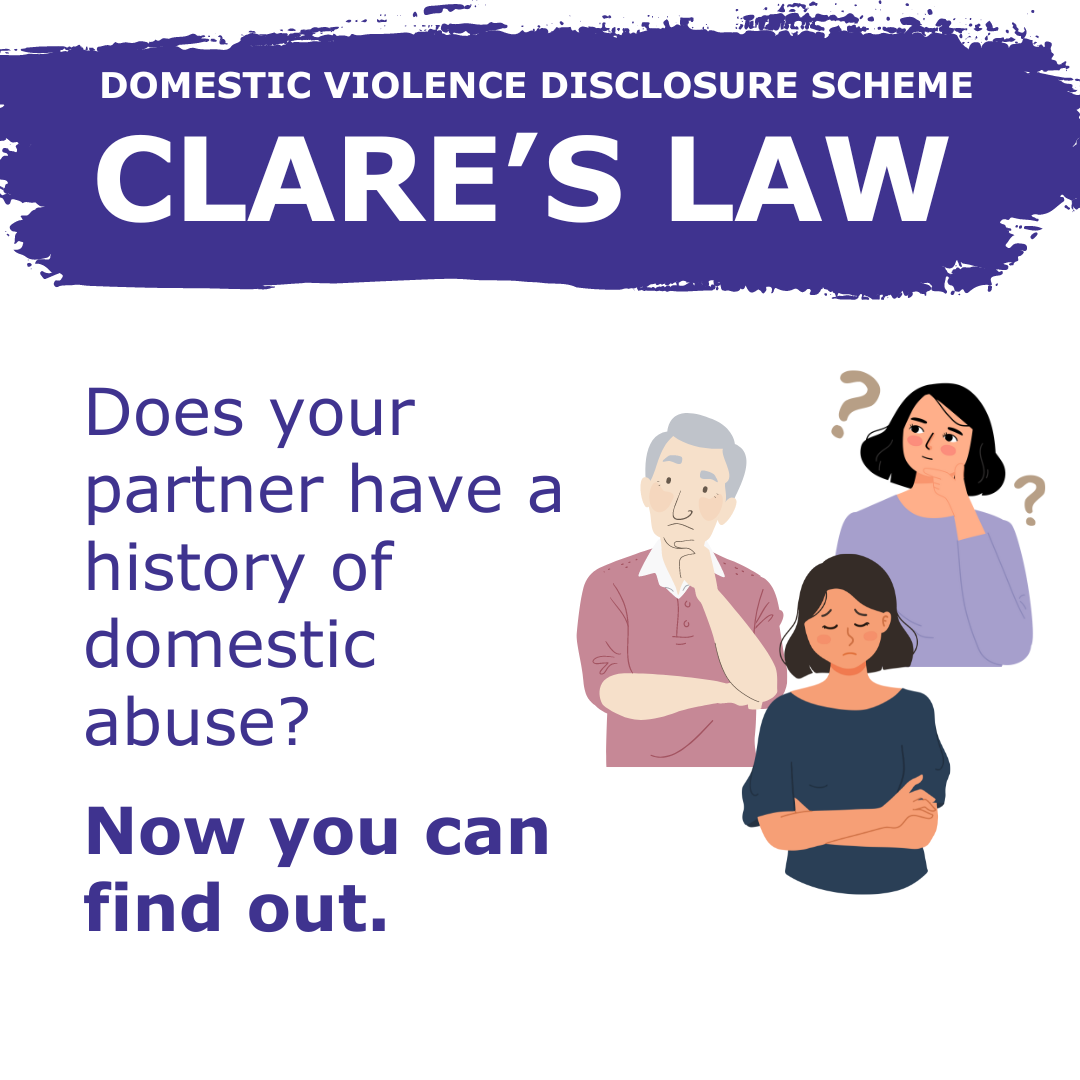
DVDS is a police-run scheme that lets you, or any member of the public formally request or receive usually confidential information about a romantic partner’s criminal history.
This might be a current partner who you are worried might have been abusive in the past. It can also be an ex-partner you are no longer involved with but believe may be a threat to your safety.
Clare’s Law was campaigned for by Michael Brown, the father of Clare Wood, a 36-year-old woman, who met 40-year-old George Appleton on Facebook in 2008. Appleton had a violent criminal history which Wood was unaware of, instead thinking that he only had moving(traffic) violations. After dating for a few months, they split up due to Appleton’s coercive behaviour and infidelity. Appleton continued his abusive behaviour which Wood reported to the police under harassment, criminal damage, threats to kill, and sexual assault. In February 2009, emergency services found Wood dead in her residence, having been strangled and set on fire. The police searched for Appleton and 6 days later, found him hanging in an abandoned pub after committing suicide.
Prior to meeting Wood, Appleton was already known to the police for a violent history, particularly in abuse cases, but a loophole in the Data Protection Act allowed domestic offenders to keep their prior criminal records confidential and historically, police in England and Wales have not responded effectively to domestic abuse. Wood’s family stated that she would not have entered a relationship with Appleton had she known of his violent past.
Under Clare’s Law you have two rights: to ask, and to know:
- The ‘right to ask’ means that you can make a DVDS application to ask about a current or ex-partner that you think might have a record of abusive behaviour or violence. Any information that the police share with you about a partner is called ‘disclosure’.
- The ‘right to know’ means that if police checks show that your current or ex-partner has a history of abusive behaviour, they may proactively share that information with you because they believe you are at future risk.
Abuse isn’t only limited to physical abuse. It can also include harassment, verbal abuse, stalking, psychological threats or manipulation, sexual assault and violent behaviour. Anyone can experience domestic abuse regardless of age, race, ethnicity, religion, sexuality, class or disability.
Domestic Abuse can be defined as an incident or pattern of incidents of controlling, coercive, threatening, degrading and violent behaviour – including sexual and physical violence. With continued changes to the law, Domestic Abuse can include:
- psychological and or emotional abuse
- physical and sexual abuse
- financial or economic abuse
- harassment and stalking
- online or digital abuse.
Clare’s Law, or some variation of it has been implemented in some countries, namely the UK, Ireland, Canada, Australia & New Zealand.