Jul 27, 2025
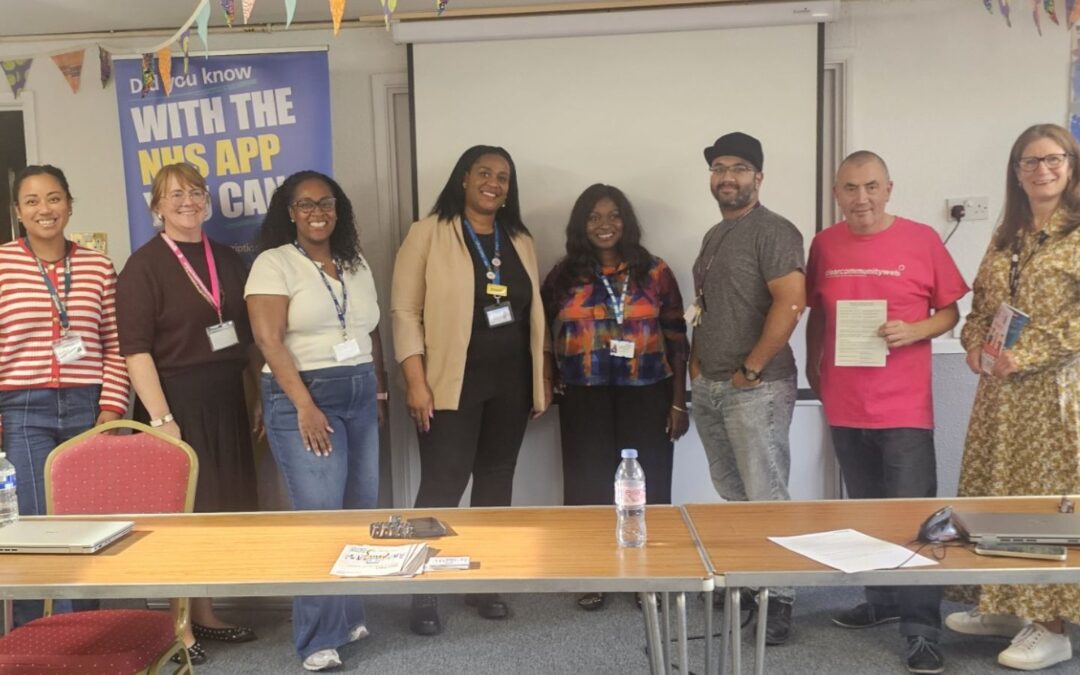
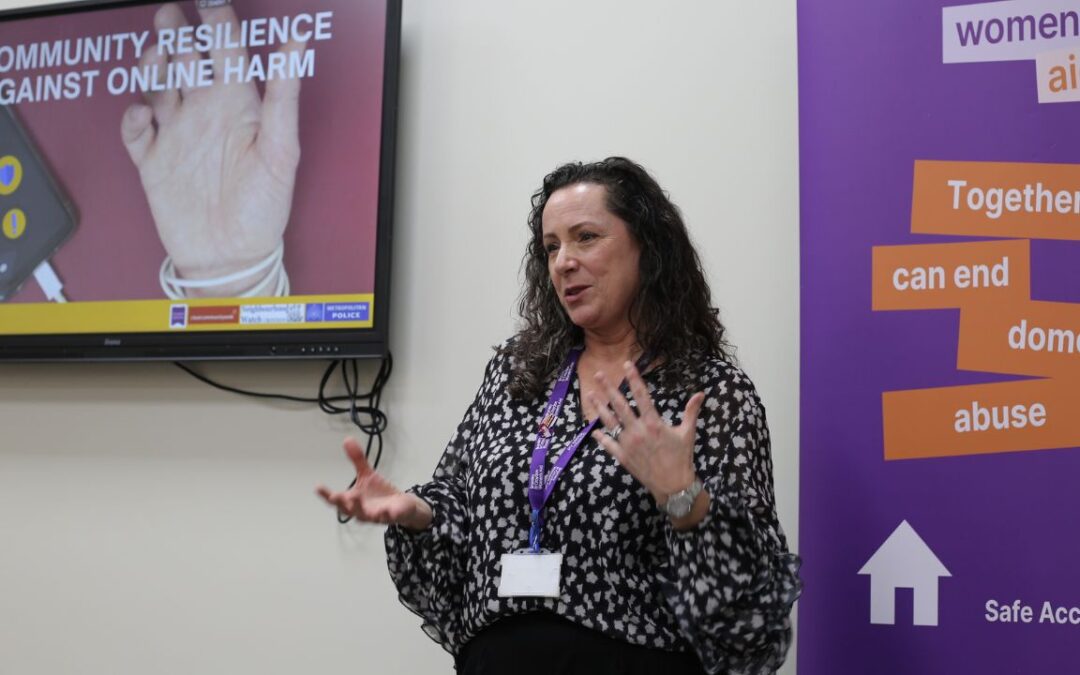
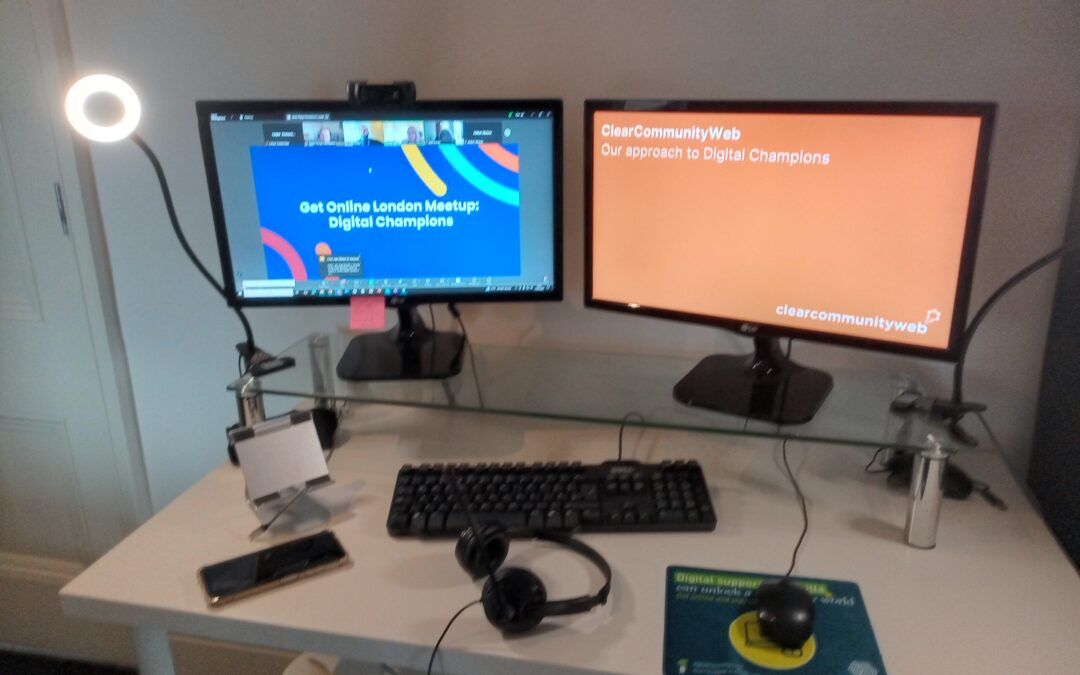
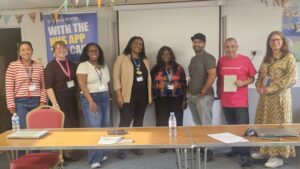
We were invited to the recent Get Online London Meet Up hosted by the Good Things Foundation to discuss our approach to Digital Champion and training.
We focused on our three keys areas that include:
Supporting Peer Volunteers:
The notion that those needing digital support will often respond better to someone who knows a little bit more and has lived their experience. ‘Experts’ can also be intimidating and tend to ‘take over’. A peer volunteer is on their own digital inclusion journey and supporting others with challenges they have just overcome is hugely empowering and develops troubleshooting skills.
Building work placed skills and community resilience:
Supporting others hones keys skills around active listening, giving clear instructions and translating new concepts. These are exactly the type of skills required in thr working place and cannot always be taught – you need space to practice this!
Creating opportunities for Digital Ambassadors
We’ve aways thought that digital support could be enhanced though intergenerational work and but providing work experience and placement opportunities we have finally found a format where there is genuine exchange of experience between generations that can also lead to unexpected positive outcomes
We grown from 3 to 32 volunteers in the last 4 years and have reached and similar amount through our volunteer training whilst supporting other organizations.
This is just the beginning!
Jul 19, 2023
Schemes such as #GetOnlineLondon are a great resource to draw on if they can make access to devices easier and keep awareness in the public eye. However. it decorates a mere wall within the House of Digital Inclusion.
The work of the VCS on the ground, brokering the relationships, building trust and delivering when other projects come to an end (and the shiny tinsel falls from the tree) must both be recognised for the tireless energy piecing things together and, importantly, for the insight gained during and post lockdown.
The rich pool of specialism they provide should be informing the next phase of any London-wide (if not nation-wide) resource or asset. Our experience of working with ‘Big Name’ organizations during lockdown was often one of incomplete delivery and difficult processes.
The stories of donations were great but often the cost of these (in terms of the operation, the setting up and the sending back of items) was higher than if we can funded the data and devices ourselves.
Lessons had to be learned and continue so.
For me it’s a missed opportunity that the VCS leaders throughout COVID in London are not instrumental in the set up, and distribution side of Get Online London. The insights gained by organizations such as Community Tech Aid, CatBytes and Power2Connect could and should be harnessed to make the acquisition, set up and distribution of devices effective and hyper-locally relevant.
These are the types of organization that will fulfil referrals or set up an inappropriate device when the larger schemes can deliver on the ground.
Speak to organizations such as Millennium about how to ignite hordes of younger people hungry to learn coding and inspire the generations moving forward and to learn from hyper specialists such as Paul Clayton and Alex Barker about assistive technology, appropriate device set up and independence for disabled residents.
This is not a grumble, but just a reminder to everyone that there isn’t an end point here, we must and can learn, share and develop from each other – but to do so we must do so!
Sep 11, 2022
Following a recent podcast with Emma Weston, CEO of Digital Unite, I was inspired to craft the following words about where I think the true work is within the digital inclusion space and challenges in the workspace but not having assumed digital skills.
Digital Inclusion may feel like an impossible stairway to climb and difficult to make THAT ‘dent’ if you are trying to fix, bridge or solve it. And there is the flaw!
If we embrace that ‘digital’ is entwined and integrated we have a good starting point to choose the area for our work and what makes the most difference to the people needing support.
Our area is working with what is commonly known as the MOST EXCLUDED, a terrible term for people that often haven’t had the right environment, may have ‘missed a step’, given the wrong or no resources, have never been taught, never been shown whilst interacting in an environment that is only ever 80% complete, constantly changes, poor interface design, doesn’t actually link up, buffers and then stops or there is an error 404 page. None of this is actually a failing with the person and more a failure of delivery and environment, yet the impact is huge especially if we are looking to improve work opportunities for long term unemployed, homebound residents and the disabled.
Clearly, I’m simplifying and amplifying, and maybe ruffling a few feathers, but sometimes if feels as if we are asking someone who doesn’t drive to get into a car, with no dashboard, half a cup of fuel, no map and expecting them to get to Timbuktoo and then if they to not achieve this within an allocated time, penalise them. (Anyone who has spent even 10 minutes trying to assist a person with no smart phone and no email to apply for a rebate or regain access to Universal Credit may recognise this scenario)
It does feel sometimes that by looking at the big picture skims over the real needs of people and we may then miss the smaller opportunities and interventions which actually provide a ‘win’ for the person and can create a change. If people ‘succeed’ they are more likely to try again. The environment and method of support is equal to the ‘tech’ here or the hard learning.
In the workplace there is an extra dynamic; we become ‘business users’ whilst overlooking the fact that we are all ‘end users’ as well and we may not applying the same attention and support to our colleagues as we may the people we are working with.
Many skills we now have to adopt within the workplace are assumed and not trained in. If you have been out of work for the last 5 years for whatever reason and you come back into the office the jump from using say an old desktop version of Office 2007 to having to use web-based word is huge.
This jump can be enough to make someone feel really anxious and you may internalise a feeling of inadequacy, losing confidence which in turn will affect your ability to do your job. If someone has other support needs this may be amplified further.
Not having the assumed digital skills in the workplace can impact you directly in the pocket as well.
True story, take the zero hour contract delivery driver we supported trying to get some hours in the weeks before Christmas. Beyond the odd day here and there, hadn’t worked for 10 years due to caring duties and had to borrow a smartphone in order to log in and bid for jobs, reply and respond to other drivers so he could cover shifts (the best way to build up hours for a new driver). He had to learn how to use both google maps as well as their proprietary system whilst driving on the job.
At the end of the week, he had to log hours and submit invoices through this mobile phone, whether he had worked or not
In trying to support his person, I estimated that he was spending an average of 3 hours per week on digital admin just to do the job, yet this wasn’t classified as paid time. The only support he had was via a chat bot in the app that he wasn’t shown how to use or even told of its existence. By the time he came to us he was already at his wits end and was a final push.
With time, practice and patience he should have been able to reduce this to a minimal overhead of effort yet didn’t survive the probation. The pressure he felt by constantly doing it wrong or being late had its toll on his overall confidence and mental health.
The lack of digital support by this company is arguably discriminatory, but what if some peer support had been available? What if he had been able to sit with a cup of tea and go over the features of the app and practice using it with another driver – not a volunteer but someone recognised for their time. Surely a better investment than the HR costs of recruiting and letting someone go.
Digital inclusion isn’t simply about being able to or not, being included or excluded. In many cases it is about a transition or a step up in a supportive way.
This may not fix the digital divide but it may certainly help someone out of a fix!