Mar 13, 2026
SIM swap fraud is when scammers take control of a phone number by switching the service from the customer’s SIM to another SIM in their possession. Its then possible to access your online accounts and personal data.
SIM-swapping fraud doubled nationally in both 2023 and 2024, with nearly 3,000 incidents reported in 2024, according to Report Fraud.
What are the signs?
- You are no longer receiving calls or texts
- Your bill/call logs show calls and texts to
numbers you don’t recognize
- Your location appears elsewhere
- You’ve been locked out of accounts you
previously had access to
Protecting yourself
- Avoid sharing your mobile number online unnecessarily
- Use app-based authentication (e.g., Google Authenticator) instead of SMS codes
- Set up a SIM PIN or passcode through your mobile provider
What to do in a crisis:
- Contact your mobile provider immediately: They can confirm if a swap occurred, deactivate the fraudulent SIM card, and help you regain control of your phone number.
- Notify your banks and financial institutions (e.g., credit card companies): Request that they freeze your accounts to block any unauthorized transactions and monitor for suspicious activity. You may be able to do this from within an app!
- Secure your online accounts: Change your passwords to new, strong, and unique ones and disable SMS-based two-factor authentication (2FA) temporarily and switch to more secure methods like app-based authenticators (e.g., Google Authenticator) or physical security keys.
- Report the fraud: Report the crime to Action Fraud online or by calling 0300 123 2040. Ensure you keep a record in case of future disputes.
- Monitor your accounts: Keep a close watch on your bank statements and online accounts for any transactions you don’t recognize. If you find any, report them immediately as unauthorized charges
Mar 13, 2026
Cyberstalking/Harassment
This involves using digital communication technologies (such as emails, messaging apps, or social media) to harass, monitor, or stalk someone. It’s not a one-off incident but repeated behaviour intended to frighten, intimidate, or distress the victim. Examples include sending threatening messages, spreading rumours online, tracking someone’s online presence, or trying to gain access to private accounts. In severe cases, cyberstalking can escalate to offline harassment.
Denial-of-Service (DoS) Attacks
A DoS attack tries to overload a system, website, or server with too many requests so that it becomes too slow or completely unavailable to legitimate users. A more powerful version is called a Distributed Denial of-Service (DDoS) attack, where multiple computers (often hijacked by malware) flood the target at the same time. These attacks can cause major disruptions for businesses, governments, and online services.
Hacking
This is when someone gains unauthorised access to a computer, system, or network. Hackers often do this by exploiting software vulnerabilities, using stolen passwords, or tricking people into giving them access. Once inside, they might steal data (like bank details), install malware, deface websites, or use the system to launch other attacks. Not all hackers are criminals — some are “ethical hackers” who test security systems but in everyday use, the term usually refers to malicious activity.
Identity Theft
This happens when a criminal steals someone’s personal information — such as names, addresses, National Insurance (NI) numbers, bank account details, or credit card numbers — and uses it to commit fraud. This could mean opening new credit accounts in the victim’s name, making unauthorised purchases, or even applying for loans. Victims often don’t know until they see unusual bank charges or are denied credit due to debts they didn’t create.
Ransomware
This is a type of malware that blocks or encrypts files on a victim’s computer so they can’t access their own data. The attacker then demands payment (often in cryptocurrency) to “unlock” it. Ransomware can spread through infected email attachments, malicious downloads, or compromised websites. High profile cases have affected hospitals, schools, and even national infrastructure. Paying the ransom doesn’t guarantee recovery, and in many cases, victims remain locked out.
Sim Cloning/Sim Swap Fraud
Sim cloning is when an attacker gains physical access to the target’s SIM card and then copies the number onto another sim card. The attacker can use this to access the victim’s texts, phone calls, and location data. From that point, they can read your text messages to get information about you, scam your contacts by posing as you, or receive 2-Factor Authentication (i.e. you login via username and password onto a site, then they text you a code your phone to make it more secure-logging in on 2 devices).
Social Engineering
Instead of hacking computers, attackers manipulate people directly into handing over sensitive information. They create convincing scenarios — for example, pretending to be a bank official, a delivery company, or even a colleague — and ask for details like login credentials, bank numbers, or personal data. Phishing emails, phone scams, and fake websites are all examples. Social engineering works because it exploits human trust rather than technical weaknesses
Mar 13, 2026
The YubiKey is a hardware authentication device developed by Yubico. It works
as a method of 2 factor authentication, where a login requires the user to
confirm their attempt to login on 2 different devices. In this instance, the user
would go to the settings of an app they have a login to, then add the YubiKey as a
“security key”. From that point on, the user will login using their username and
password like before but also need the YubiKey to be plugged into the device at
the same time.
The latest edition of the YubiKey costs £50.16 direct from the website and
£56 on Amazon. It has been designed to support USB-A, USB-C and NFC,
Lightning ports.
Reviews for the product praise it for the physical durability of the device as well
as its versatility across multiple platforms and its strength against phishing attacks.
However, customers also note that the small size of the product can lead it being
lost or stolen, the initial cost to purchase is high, and the setup can be a bit
confusing for those not so technically minded.
The product can be purchased directly from the website (https://www.yubico.com/) or from Amazon (https://amzn.eu/d/eFqoSuK)
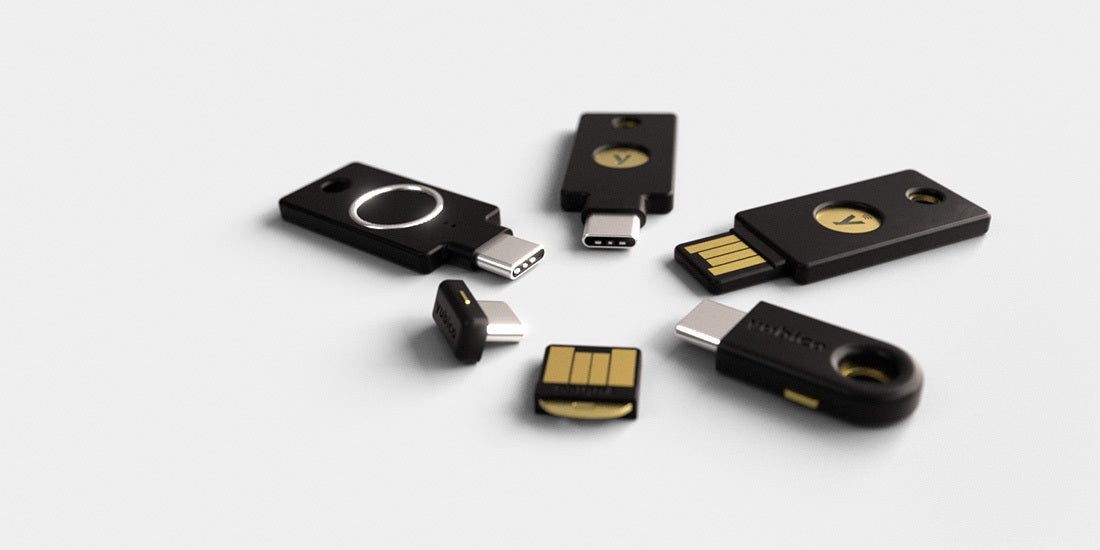
Collection of YubiKeys for different USB ports