Proudly launching the Community Cyber-Shield

Proudly launching the Community Cyber-Shield

Since last summer we have really been working to boost awareness in the community about various aspects of online safety and being protected from both harm and fraud.

We have been supported by our Digital Ambassador Joshua Russell, who is not only passionate about this subject but really supports us to understand this subject through the lens of different generations.

The culmination of one of his projects is the Community Cyber-Shield, a newsletter crammed full of practical advice, reviews and resources to help our community feel safer online and be more aware to look out for the people we are close to.

For many people, this can feel like an overwhelming subject with no end in sight. It also feels like a world for those who can rather than those who can’t, yet as our world is increasingly online, we must find ways in which we can participate safely, and importantly, be mindful of those needing a little more support.

Inside you will find

  • Practical advice you can actually use.

  • Tech reviews and honest resources.

  • Safety tips for you and your loved ones.

We know the internet can feel overwhelming—like a world built for “techies” only. But as our lives move more online, we believe everyone deserves to participate safely.

We will be looking to update this through the year and are looking for a sponsor to print this wonderful resource and help us reach the community is a digestible way.

Take a look here

Deepening our understanding of Tech Facilitated Abuse

Deepening our understanding of Tech Facilitated Abuse

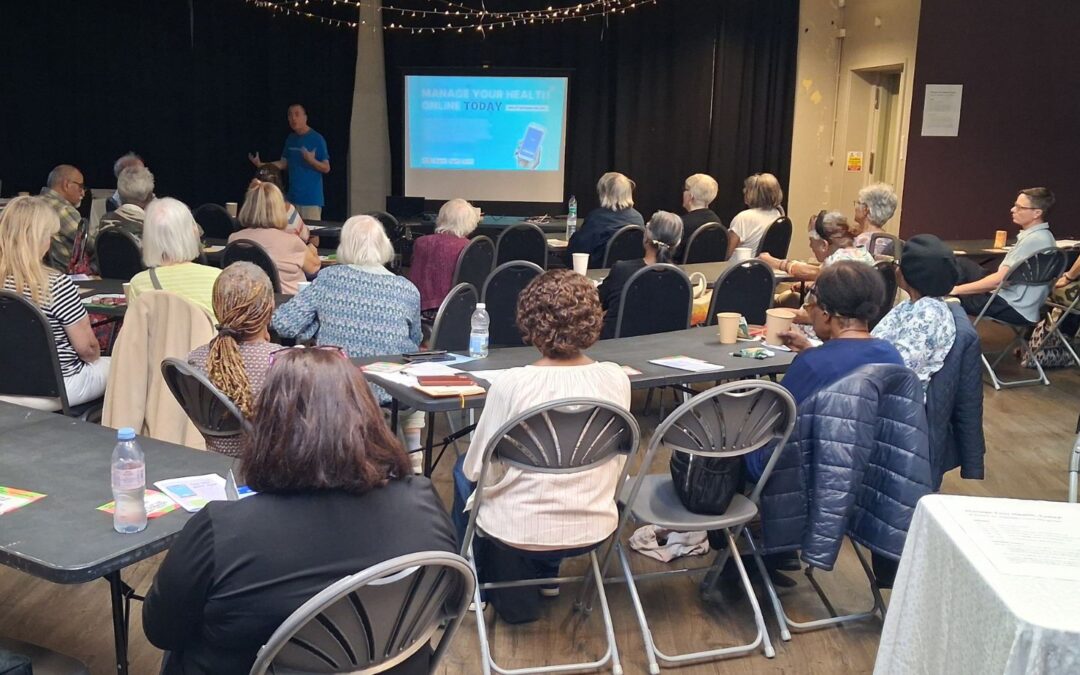
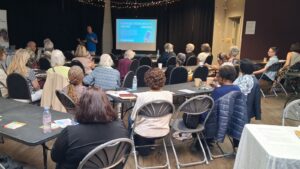
As part of our Community Resilience and Online Safety programme we recently facilitated a training and awareness event at Croydon Central Library exploring how technology is increasingly used to control, harass or intimidate people.

Whether this is tracking partners via mobile phones, surveillance through webcams and other devices, coercive behaviours and cyber bullying; it’s an increasingly prevalent subject.

The statistics are stark with 13% of women experiencing online abuse see it progress to the real world and a staggering 46% of people under the age of 30 report being tracked by a partner without their consent.

Knowing what to do to be safer online and be aware of where there are risks is crucial.

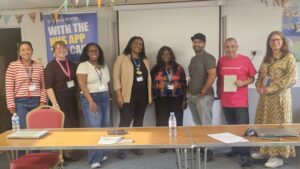
We were joined by the MET Cyber Protect Team and Bromley & Croydon Women’s Aid as part of our VCS training programme to understand the extent of the problem and what technical measures we can put in place,

We also explored tools from the Cyber Helpline as well as the fantastic Kulpa app to support the gathering of evidence and submitting.

In parallel we had a programme if micro-workshops lead by our Digital Ambassadors Jody Micallef and Joshua Russell who took us through how to secure Facebook privacy settings and the rise of AI and Image based Sexual Abuse (IBSA).

We have been supporting people who have been hacked or scammed for some time now and there is huge challenge in re-building (or building from scratch) the confidence to re-engage with the web and services we need to access to ‘be included’.

We feel very strongly about this working full time with the digital inclusion space and where we have seen this intersect is a reality that those without the confidence of ability seek the right technical help or be able to manage privacy settings will not only be more at risk but will experience exponentially worsening outcomes.

Our next two training session will take place in Brixton later this month at WeAre336

Places still available here


Celebrating our work at Anerley Town

Celebrating our work at Anerley Town

Looking back over the last year it’s been great to review our impact at Anerley Town Hall.

Funded through Clarion Digital Futures, our digital inclusion programme has had different touchpoints with the community to ensure local residents have had the digital support and access they need.

226 people, directly benefitted through 115 hours of digital skills training and 127 volunteer hours (With a social value of £1,879 at London Living Wage)

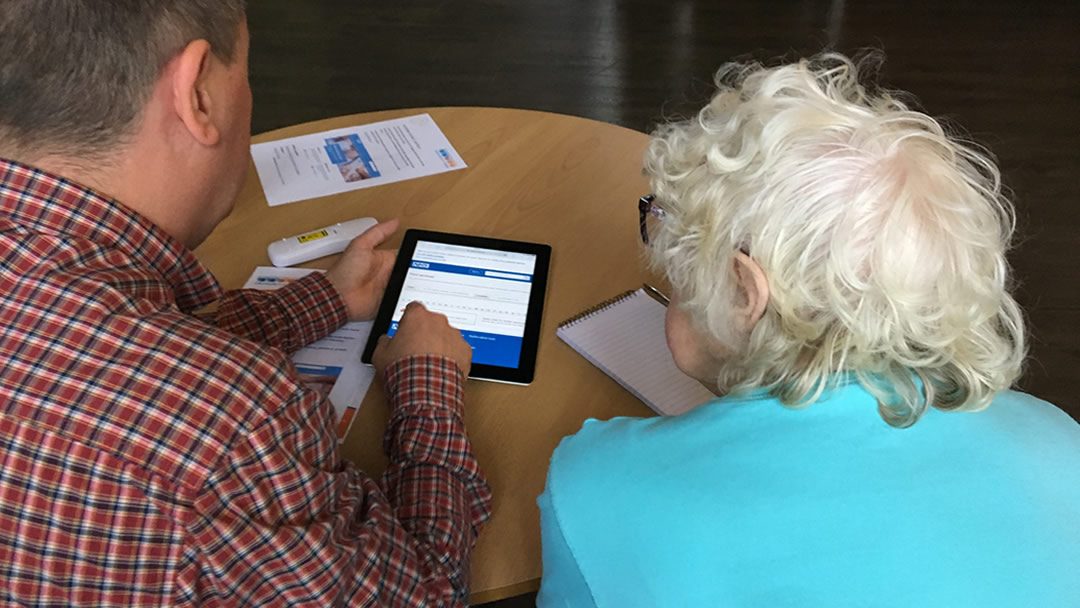
Through our weekly Digital Drop-In, alongside Citizens Advice Bromley, we created a space where people could come and sit with a volunteer or practice in a social setting and  our Community Learning programme delivered courses designed to help people build confidence with a new device, brush up skills after a little time out or just fill in the gaps we call have around being safe online and organising files or storage.

Having someone there who doesn’t judge you changes everything. The support helped me recover from a scam and gave me back control. I used to avoid my phone because I thought I’d break it. Now I transfer files by myself and even help friends.

We embed Learn My Way to extend activities at home and to support people to be more comfortable with an online learning platform; now a defacto standard within the workplace.

We’ve seen some fantastic outcomes:

  • 90% reported reduced anxiety around using technology
  • 100% reported increased confidence in device use.
  • Over 65% now support others with digital tasks.
  • 80% engaged in new social activities through group connections.

We look forward to returning to Anerley Town Hall as soon as we can.

Community Resilience and Online Safety Training

Community Resilience and Online Safety Training

A new programme in Lambeth to support the voluntary sector, frontline staff and active
community members to be more equipped to help others at risk online – be it from scams,
fraud or online abuse and other harm.
Join the MET Cyber Protect Team and ClearCommunityWeb for a series of presentations
to cover the fundamentals with follow on workshops to put this all into practice in small
groups.
5th March (2pm-5pm) at 336 Brixton Road, London, SW9 7AA
  • Practical advice on a range of subjects including Phishing, Social Engineering, Ransomware, Password Security, Secure Connections, Supporting Others & Reporting (MET Cyber Protect Team/ ClearCommunityWeb)
12th March (2pm-5pm) at 336 Brixton Road, London, SW9 7AA
  • Small group work covering identifying and handling corrupted devices, privacy checks, securing accounts and reporting a cyber crime. (ClearCommunityWeb)
16th April (2pm-5pm) at 336 Brixton Road, London, SW9 7AA
  • Practical advice to understand more about Tech Facilitated Abuse, how it is used to monitor, coerce and control, as well as threatening behaviour and online harm.  (MET Cyber Protect Team/ ClearCommunityWeb)
23rd April (2pm-5pm) at 336 Brixton Road, London, SW9 7AA
  • Small group work covering tracking, online harm, tools to gather evidence, securing phones & recovery planning. (ClearCommunityWeb)
This programme is supported by Lambeth Neighbourhood Watch, Lambeth Safer Neighbourhood Board and MOPAC.
Connecting Communities – A free tablet and training for Hyde Housing residents in Lambeth

Connecting Communities – A free tablet and training for Hyde Housing residents in Lambeth

Calling all Hyde residents! Come and build your digital confidence with a free tablet and training.
Join Lloyds Bank Academy & ClearCommunityWeb for programme of support to help you get online and connect with your community.
To be eligible for this scheme you must be
  • A Hyde resident
  • Low income
  • Over 18
To get your free tablet you must attend a 2 hour training session to help you set the tablet up safely in either Kennington or Stockwell – dates TBC
You will then be able to access
  • A learning guide
  • Drop in Support in Stockwell
  • Follow on workshops and online classes
  • Zoom training
Register your interest here: https://form.jotform.com/260484239300351
Further information: info@clearcommunityweb.co.uk or 07523 646 277.
Developing our Community Resilience & Online Safety training

Developing our Community Resilience & Online Safety training

We’ve recently been extending our community-placed digital inclusion to explore how front-line workers and voluntary sector can better support the people they work with digitally.

This requires an approach which supports people to be more confident in their own knowledge and capability whilst ensuring that the support they give follows a form of best practice and reduces dependency.

A huge stepping-stone for this has been forming what is now called our Community Resilience & Online Safety programme which we have recently been running Croydon and are now about to launch in Lambeth. The goal is to train the voluntary sector to support the people they work with to be safer online and be confident this is being done in a consistent way.

We’ve partnered with the MET Cyber Protect team to provide a good grounding in the risks and realities of common cyber threats and the Computer Misuse Act which allowed us to really drill into how we can recognize people in the community who have either be at risk or have been compromised and to provide the appropriate support for this situation.

This is then followed the week after with small group work and practical activities thinking through common scenarios and approaches.

This then leads into dedicated sessions focusing on Tech Facilitated Abuse and how we can support people against online harm and cyber stalking.

We include the tools and techniques to support people to audit and secure their accounts and devices in a person-centred way so that they have an opportunity to move on emotionally and competently.

This will have its own journey and timeline depending on circumstances and so I have been long interested in how we can build community solution that allow people to be able to work to their own plan of things whilst getting access to a supportive environment – crucial components in all our work.

Central to all of this has been the development of our Resilience Plan approach and hugely influenced by the LinkedIn posts from Marc Raphael at 911Cyber

Key to the success of the training is developing a range of scenarios and activities for volunteers and frontline staff to explore and to help people to think through a strategy to help someone with.

This is very similar to the Exercise in a box approach from the NCSC, the key difference being context and language. The vernacular of IT is barrier and is something that we address.

This is less about being a cyber security expert and more about what I can do for community members to help them when something happens in an empowering way and is often about helping someone to gather their thoughts.

In many ways it’s like an Active Bystander approach.