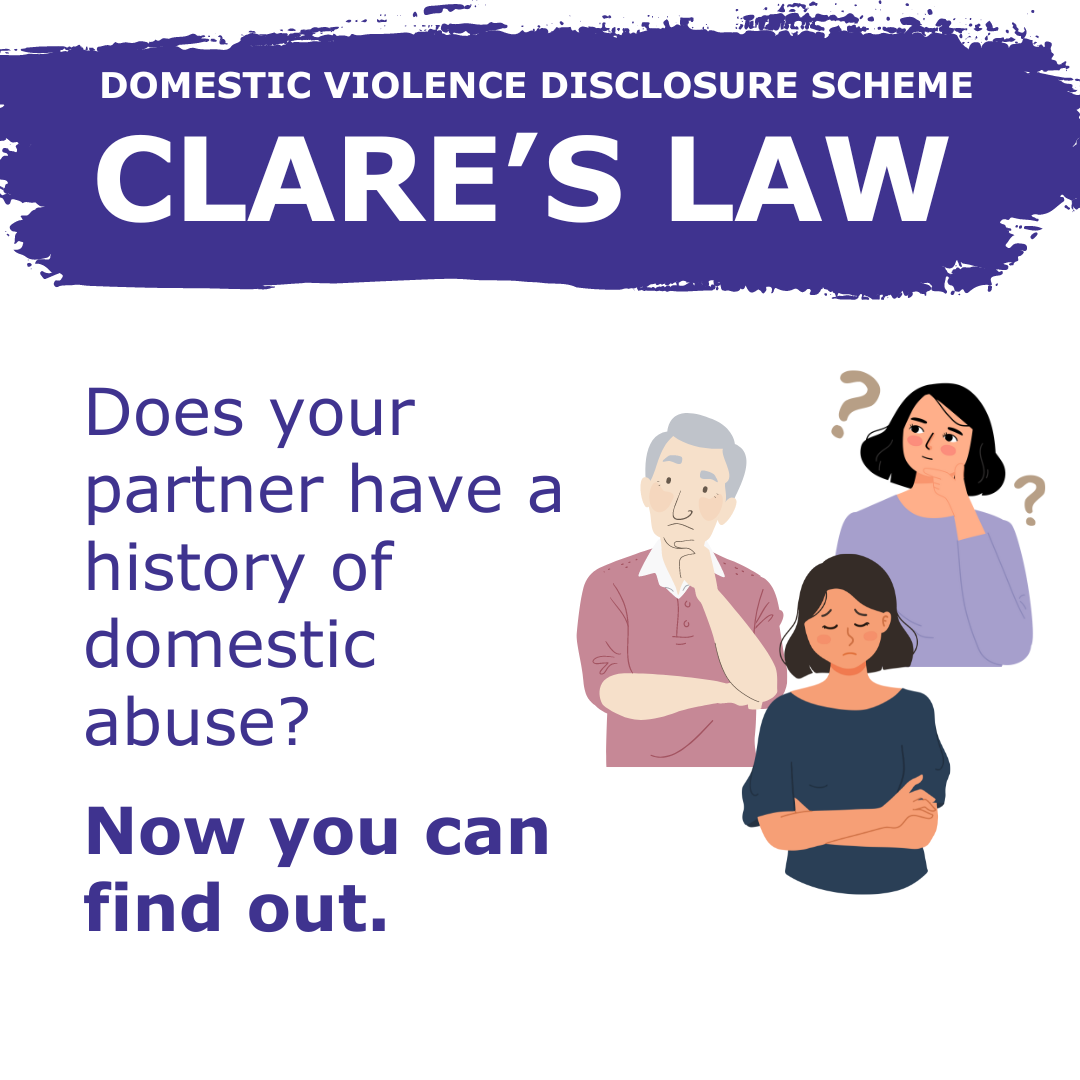
DVDS is a police-run scheme that lets you, or any member of the public formally request or receive usually confidential information about a romantic partner’s criminal history.
This might be a current partner who you are worried might have been abusive in the past. It can also be an ex-partner you are no longer involved with but believe may be a threat to your safety.
Clare’s Law was campaigned for by Michael Brown, the father of Clare Wood, a 36-year-old woman, who met 40-year-old George Appleton on Facebook in 2008. Appleton had a violent criminal history which Wood was unaware of, instead thinking that he only had moving(traffic) violations. After dating for a few months, they split up due to Appleton’s coercive behaviour and infidelity. Appleton continued his abusive behaviour which Wood reported to the police under harassment, criminal damage, threats to kill, and sexual assault. In February 2009, emergency services found Wood dead in her residence, having been strangled and set on fire. The police searched for Appleton and 6 days later, found him hanging in an abandoned pub after committing suicide.
Prior to meeting Wood, Appleton was already known to the police for a violent history, particularly in abuse cases, but a loophole in the Data Protection Act allowed domestic offenders to keep their prior criminal records confidential and historically, police in England and Wales have not responded effectively to domestic abuse. Wood’s family stated that she would not have entered a relationship with Appleton had she known of his violent past.
Under Clare’s Law you have two rights: to ask, and to know:
- The ‘right to ask’ means that you can make a DVDS application to ask about a current or ex-partner that you think might have a record of abusive behaviour or violence. Any information that the police share with you about a partner is called ‘disclosure’.
- The ‘right to know’ means that if police checks show that your current or ex-partner has a history of abusive behaviour, they may proactively share that information with you because they believe you are at future risk.
Abuse isn’t only limited to physical abuse. It can also include harassment, verbal abuse, stalking, psychological threats or manipulation, sexual assault and violent behaviour. Anyone can experience domestic abuse regardless of age, race, ethnicity, religion, sexuality, class or disability.
Domestic Abuse can be defined as an incident or pattern of incidents of controlling, coercive, threatening, degrading and violent behaviour – including sexual and physical violence. With continued changes to the law, Domestic Abuse can include:
- psychological and or emotional abuse
- physical and sexual abuse
- financial or economic abuse
- harassment and stalking
- online or digital abuse.
Clare’s Law, or some variation of it has been implemented in some countries, namely the UK, Ireland, Canada, Australia & New Zealand.