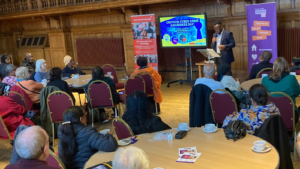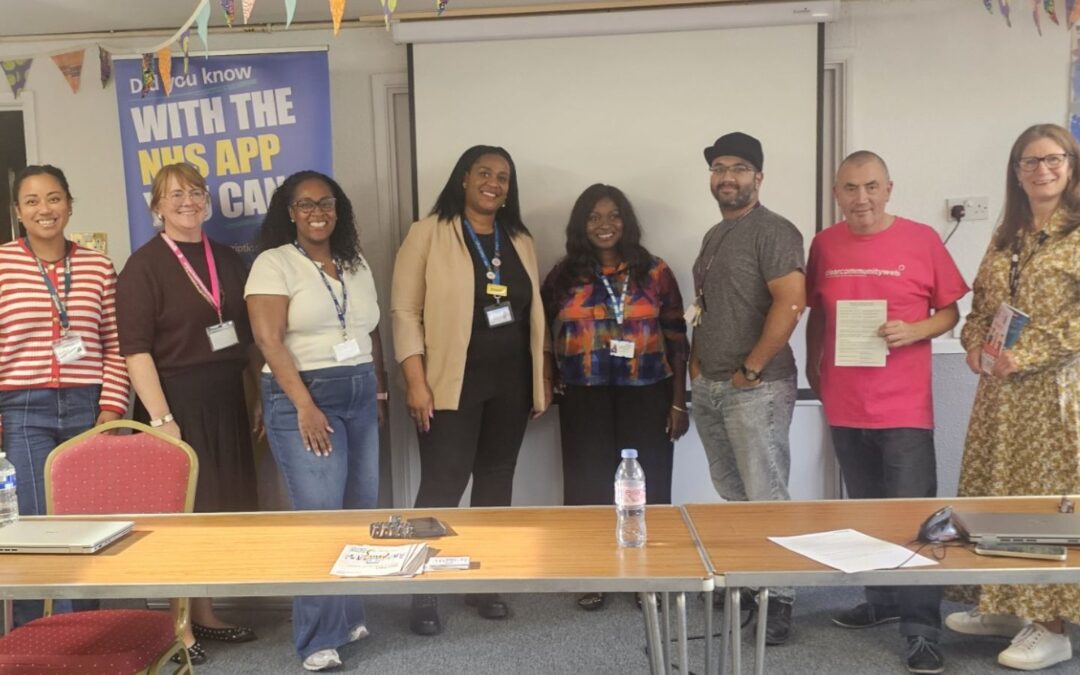
A pleasure to contribute at the recent Healthwatch Bromley engagement about the NHS App and MyChart. Joined by colleagues from SEL ICB, King’s College Hospital, and Bromley Trading Standards at the Penge East Community Centre, it was an opportunity to bring different strands together to understand how to manage your health online.
For too long, I’ve raised the issue of the focus being so much on the NHS App, as opposed to supporting people to manage their health and health information online more broadly.
This makes it harder for people to differentiate between managing primary and hospital care, and to understand why there are multiple apps to do so. Every challenge gets compounded into an issue with the NHS App, rather than a data-sharing or system integration issue.
While this distinction is broadly irrelevant to someone who just wants to get things done, it’s crucial to bear in mind — whether troubleshooting a technical issue or encouraging people to use the features that will actually be useful to them, rather than focusing on what can’t be done.
Many of the issues people face are more about how they interact with technology, how their accounts were set up, or being rushed into doing something without the time to explore it for themselves. This includes things like swapping between apps to get a 2FA code, the fact that many households share a single email address, or being locked out of accounts — all the stuff that happens before they even get to use the app.
It’s a good reminder to the digital inclusion sector that the support we provide is often about these foundational skills, and that we need to work on encouraging people and being easy on simple mistakes. This is best illustrated by showing that this stuff goes wrong for all of us — it certainly does for me.
Community-based support is integral to the adoption of systems like the NHS App. These “bits between the bits” aren’t observed or necessarily covered by the NHS App, MyChart, or any other support desk — so truly supporting the VCS, and understanding what they do, is a must.
Kudos to Orla and the rest of the team at Healthwatch Bromley for shining a light on some of this, and for namechecking us in their recent report.