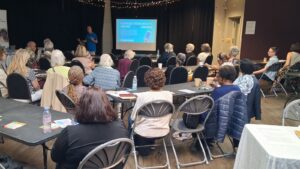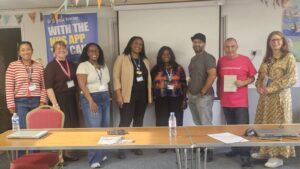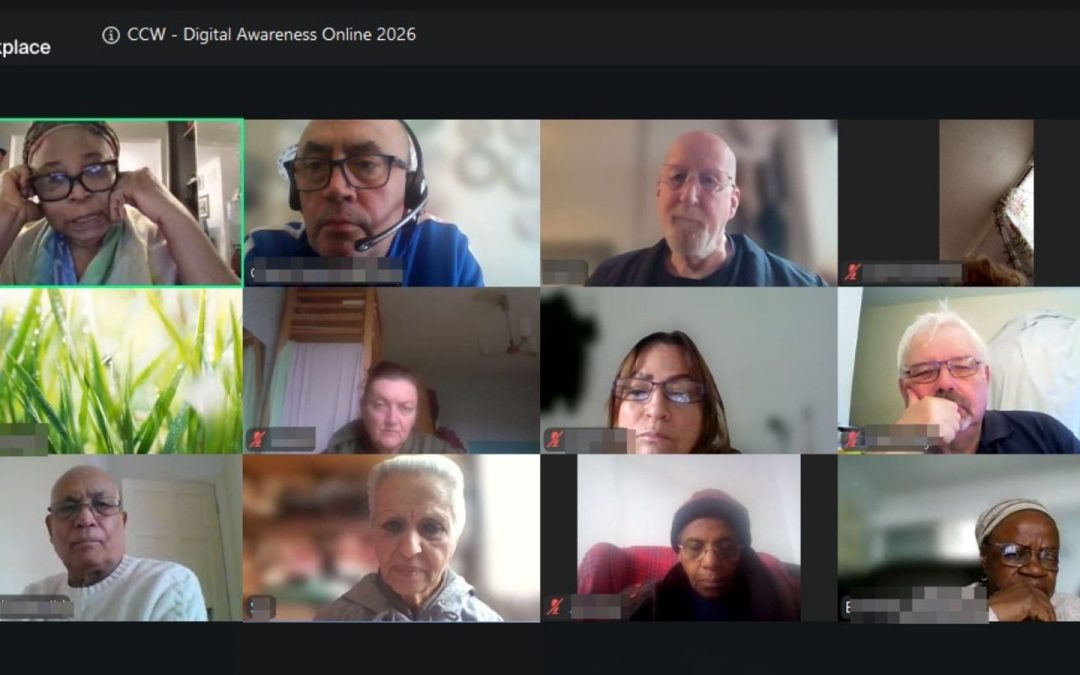
After a short break, it was great to bring back our Digital Awareness Online Class, where we caught up as a group, explored some of the new features in WhatsApp, and reminded ourselves of the Which? Scam Alert Service.
Digital Awareness Online was an idea that should never have worked, but in the face of many obstacles, it has thrived and become much more than the sum of its parts.
Flash back to March 2020: I was running a small class at the Upper Norwood Library called Digital Skills for Seniors. The threat of Covid was imminent, but none of us knew what was in store or what we had to prepare for. I invited those who were interested to a small info session about how to shop online on Friday morning. Three people came, and I surreptitiously installed Zoom on their laptops.
By Monday, we were locked down and locked in. There was nothing left to do but send an email to the 12 names I had and follow up by phone. On Tuesday, we ran our first online class. Teaching people how to use Zoom via Zoom might sound like ‘Crazy Talk’, but it worked—and it still does!
Five people turned up to that first class. One of them wasn’t known to us beforehand—we still don’t know how they found out about it—but both they and the group continued to grow.
Through the periods of lockdown, we would share photos and videos of the local area via social media. It was a great way to show the strength of hyper-local connection, which at the time we often took for granted. Mainstream news tended to focus on national or international affairs, leaving next to nothing about what was happening right on our doorstep.
Today, we have a membership of over 80 people. Each class covers a timely topic—today we covered WhatsApp usernames, the return of winter fuel scams, and smart fridges being hacked across Europe. It’s always as much a live discussion about people’s real experiences as it is a structured lesson.
That peer interaction is what makes it special. The group has naturally evolved into an informal lived-experience steering group, guiding how we support people and deliver content across our other classes and workshops. It’s not just the high-level topics that matter to the group, but the specific, practical details that affect their daily lives.
While we focus heavily on online safety, we’ve also introduced AI, navigated the transition to Windows 11 (extending the life of Windows 10 along the way), explored the NHS App, and demonstrated how to use QR codes.
Members of the group have since gone on to participate in steering groups with the Good Things Foundation, provide feedback to hospital trusts about the MyChart App, and support Digital Unite with client user testing. It has become an invaluable community resource—and a real opportunity for people to contribute back into a system they previously felt excluded from.
We also run a WhatsApp group for ongoing peer support, and once you’re a member, you get a recording of each class in case you miss one.
If this sounds like something for you, feel free to register here and come on board